German

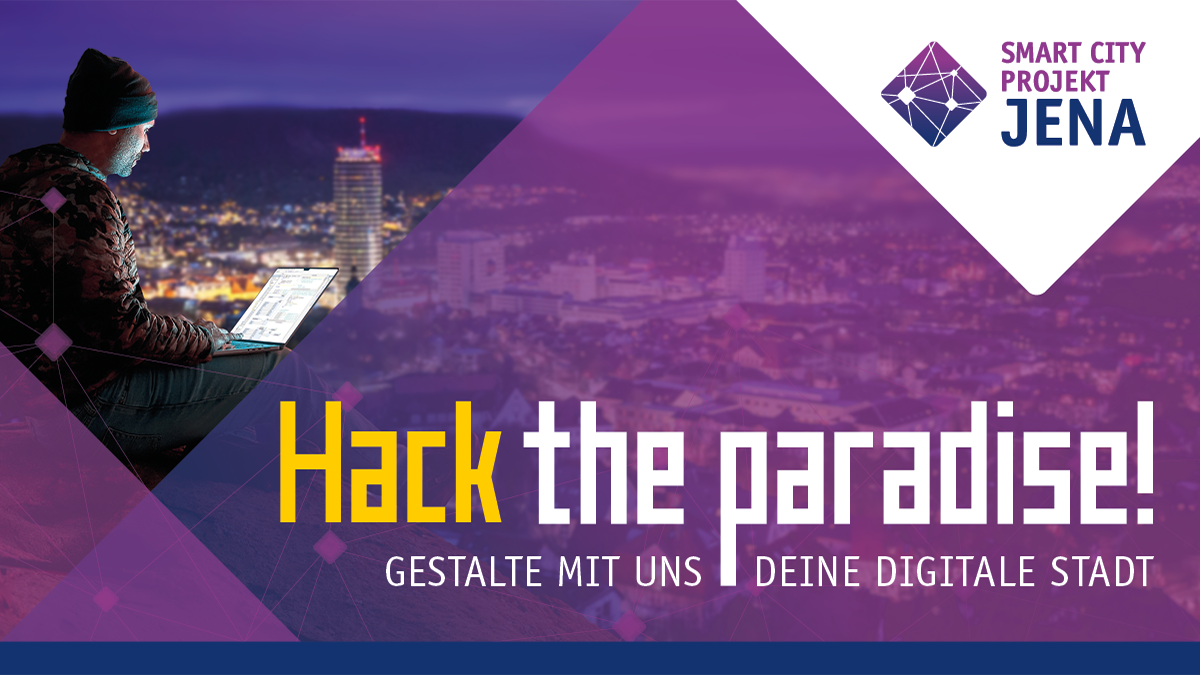
Hack the paradise!
16.06. and 17.06.2023
Design your digital city with us
As a successful innovation hub, our goal is to shape the city of Jena step by step in a future-oriented and sustainable way with the help of digital technologies.
We are counting on the swarm knowledge of our city and want to work together with business, science and civil society on smart solutions for our city. That is why we are inviting developers, creatives, visionaries, students, data experts, designers and interested citizens to Hack the paradise! - the hackathon to shape our (digital) city of the future. Together, we are looking for innovative solutions to make Jena an even better place to live, work and study.
Hackathons - a neologism made up of "hacking" (playful for programming) and "marathon" - come from software development and are collaborative development and design competitions. In interdisciplinary teams, innovative solutions for specific problems and challenges are developed in a short space of time.
As part of the two model projects Smart City and 5G Traffic Networking, we want to focus on the topic of "Urban Data Platform & Sensor Technology" for the first hackathon. After all, a state-of-the-art digital infrastructure is a prerequisite for developing our city into a more attractive place to live and work through the intelligent use of urban data.
Videos
These were our mentors

Martin Berger
City of Jena/ Smart City Project

Stefan Bischof
City of Jena/ Smart City Project

Volker Holzendorf
City of Jena/ Smart City Project

Johannes Kretzschmar
Lichtwerkstatt Jena Open Photonics Makerspace / FSU Jena
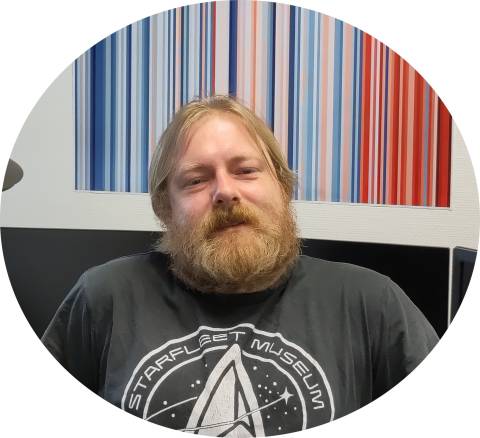
René Arnold
City of Jena/ Municipal Information Technology and Telecommunications
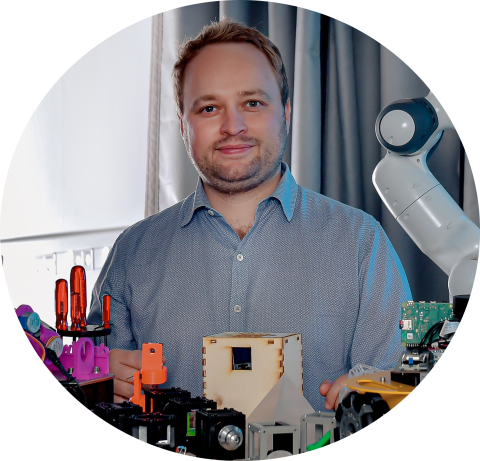
David Zakoth
Lichtwerkstatt Jena Open Photonics Makerspace / FSU Jena

Lars Hinneburg
Spleenlab GmbH
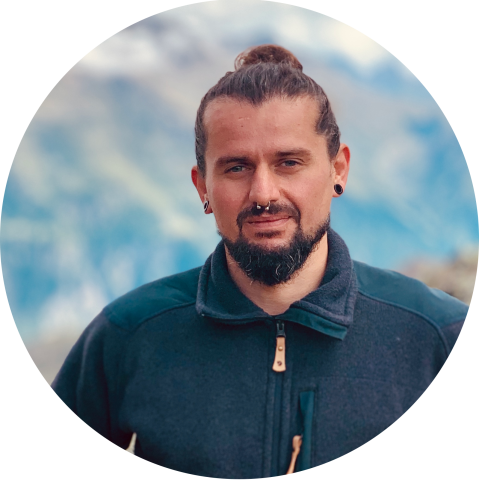
Dr. Oliver Mothes
Transfer Coordinator Science/ Thuringian Center for Learning Systems and Robotics
Markus Hochstein
Freelancer in the field of software development
Review
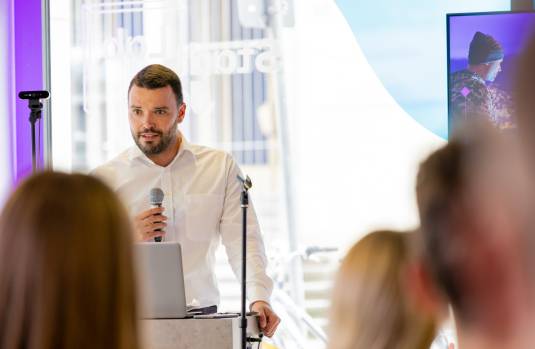
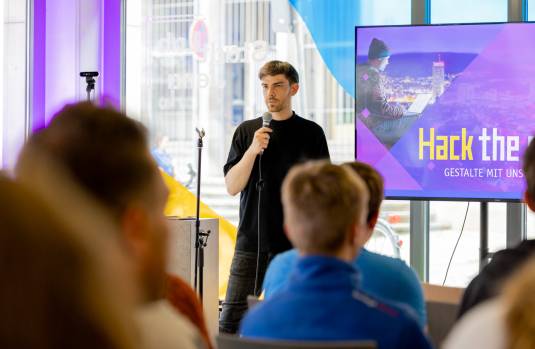
The first "Hack the paradise!" hackathon took place on June 16 and 17, 2023.
The Jena projects "Smart City" and "5G Traffic Networking" had invited to this special event to promote innovative ideas and solutions for the challenges of a smart city.
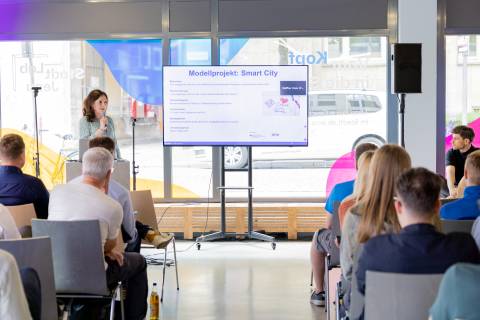
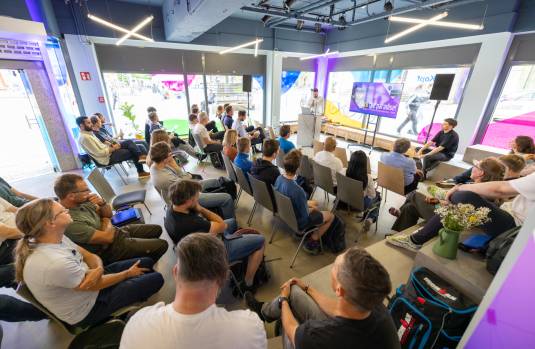
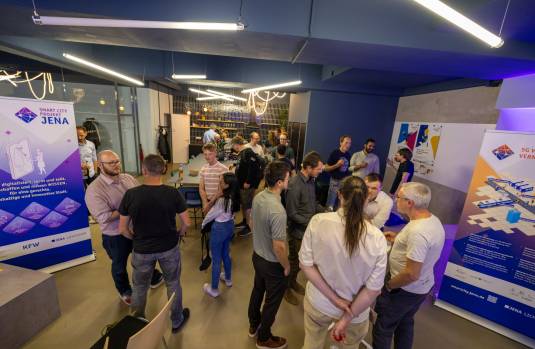
Over 50 enthusiastic participants worked in 6 teams to develop digital solutions to the questions posed by the challenges.
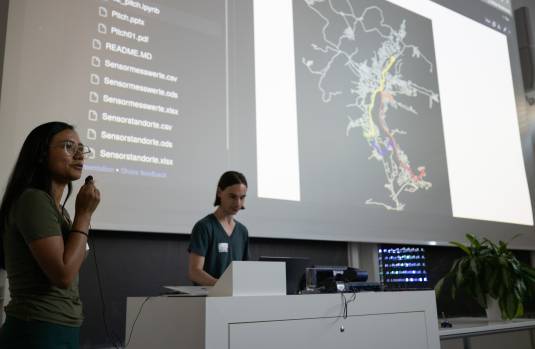
As the university's open maker space, the Lichtwerkstatt Jena provided the perfect setting. At the final pitch, an expert jury and the enthusiastic audience determined the winners of the challenges. The winner was the team that developed a watering route optimization system for Kommunalservice Jena for the "Soil moisture sensors" challenge. Second place went to the teams that presented solution ideas for measuring pedestrian frequency in the city centre and for visualizing the live position data of a streetcar.
What happens now?
Hack the paradise! will continue! All projects from the hackathon are on the list of topics for the Jena Smart City project and will be taken forward. Workshops on selected topics and hackathons are planned for the entire duration of the project. The group of participants from "Hack the paradise!" will be the first to know the dates. All information and announcements can be found on the Smart City Jena website.
Results of the challenges
- Construction of bike sensors
-
Bild
 Challenge Bau von Open Bike Sensoren© Stadt Jena
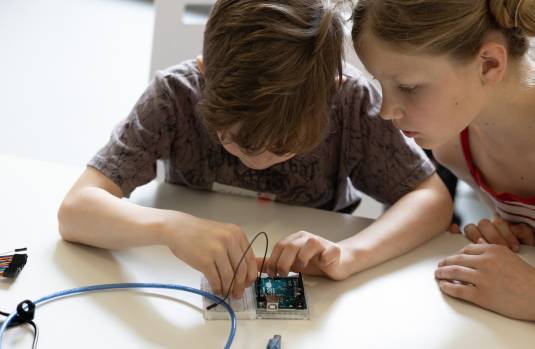
The material for 20 open bike sensors was ready for the challenge. Over 15 people set to work making the sensors with soldering irons and technical skills. It turned out that the task was very challenging in terms of time. During the hackathon, 4 Open Bike sensors were completed and two more were successfully assembled by the participants themselves. For the unfinished sensors, the participants of the challenge will soon be able to continue working on them in the light workshop.
- Quality assurance of sensor data
-
Bild
 Challenge Qualitätssicherung von Sensordaten© Stadt Jena
The challenge dealt with the question of how the accuracy of sensor readings can be estimated and further processed as a quality feature. This is necessary so that conclusions can be drawn from real-time data from hundreds of sensors in the future, e.g. for environmental and weather data, soil moisture, traffic or energy consumption, and processes can be controlled.
Three options were identified and explored in greater depth: evaluating the technical specifications of the sensor and automation options, scanning the data series for irregularities and implausible trends according to certain criteria, comparing the data series with values from trustworthy, monitored sensors or with the trends of the "sensor swarm".
The participants developed valuable ideas and in some cases algorithms for all three approaches. This resulted in very good contributions for the further development of the urban data platform.
- Soil moisture sensors
-
Bild
 Challenge Sensorik Bodenfeuchte© Stadt Jena
The challenge presented two challenges: The team led by mentor Oliver Mothes, Sofia Moya, Daniel Loos and Raúl Hernández worked very creatively on a route optimization for the irrigation management of urban green maintenance and on a visualization of microclimate data of the urban forest. Specifically, a route optimization was to be designed for the watering points (city trees) in the urban area, which the participants solved by calculating permutations. As a result, the shortest route is shown in color on a map of the urban area. For the microclimate data of the urban forest, a map was created in which each measuring station can be selected individually and for which the microclimate data is displayed in a diagram.
The results are impressive: In the voting by the jury and the public, the team emerged as the winner! In the future, these ideas will have to be developed further, as many other factors are to be considered in the model for route optimization.
- Pedestrian frequency
-
Bild
 Challenge Passantenfrequenz© Stadt Jena
In this challenge, the three-person team led by mentor Lars Hinneburg from Spleenlab GmbH developed a solution based on a combined approach for recording pedestrian flows by reading MAC addresses of mobile receivers and the video-based, AI-supported analysis of video recordings. This solution can be used to record pedestrian and bicycle frequencies as well as the through traffic of delivery vehicles at predefined locations in the city center using real-time data in a cost-effective, interference-free and data protection-compliant manner.
The team presented an initial prototype that was already able to record the people present in the room during the presentation of the results. The clear results were awarded second place in the jury voting! This solution is now to be further developed so that it can be used in an urban environment.
- Data visualization of event-related data
-
Bild
 Challenge Datenvisualisierung ereignisbezogener Daten© Stadt Jena
The challenge asked participants to find a creative approach to visualizing large amounts of real-time data. Initial ideas for visualizing streetcar data involved displaying their journeys on an interactive map in real time to provide useful information to passengers and transport operators.
This solution is based on an intelligent algorithm that collects streetcar data and processes it in real time. The first step was to display the positions of the streetcars on the city map, with further relevant data such as arrival times, delays and detour to follow. Thanks to the clear visualization, passengers will be able to plan their journeys better in future, for example, and Jena's public transport system will be able to monitor the flow of traffic more efficiently.
The results were presented via a user-friendly web application by Challenge participant Lazaro Alonso. The development of an innovative live display of streetcar data was impressive. These vivid results were awarded second place in the public vote!


FAQ
You don't need any special skills or hackathon experience to take part in Hack the paradise! Just bring your notebook and the time and desire to work together in interdisciplinary teams on ideas and concepts.
Unless you only want to build sensors, you don't need any programming skills. For most challenges, you or at least someone in your team should have some programming experience. At least as important as programming skills are specialist knowledge of the respective challenges, conceptual know-how, presentation skills, creativity and an affinity for design. Experience has shown that the best ideas come from interdisciplinary teams!
We aim to provide a safe and comfortable environment and a harassment-free experience for all; regardless of the following:
- Gender, gender identity and expression
- Age
- sexual orientation
- Disability
- physical appearance
- Nationality
- Religion
- political views
- previous hackathon participation or lack thereof
- IT experience or not
- chosen programming language or tech stack
We do not tolerate harassment of hackathon participants in any form. Sexual language and imagery is not appropriate at any hackathon venue, this includes the following:
- Hacks
- Talks, presentations, check-ins, workshops or demos
- any parties associated with the hackathon
- social media
- all other online media
Harassment includes offensive verbal comments, intimidation, stalking, following, photographing or audio/video recording without consent, persistent interruption of conversations and unwelcome sexual attention.
Hackathon participants who violate these rules will be asked to cease harassing behavior immediately and may be excluded from the hackathon at the discretion of the hackathon organizers.
Report to the organizing team if participants behave inappropriately in any of the above points.
Let's create a fair environment for everyone together!
We want to improve the quality of life, communication, networking and cooperation in the city through jointly developed and implemented innovations.
To this end, the city's existing networks from business, science, administration and urban society will be activated and encouraged to help shape urban life.
In the process of developing a data policy, a common understanding and a practiced approach to handling data will be developed that pays particular attention to the protection of personal data and the transparency of public data.
The ability to cooperate, collaborate and jointly develop third-party funding will be improved through networking and collaboration. The Smart City project (Jena Digital Werkstadt) is creating a networking and collaboration platform through which the city of Jena implements, exchanges and further develops digital solutions with partners.
We want to promote selected project ideas. This is always done in close coordination with the jury, the challenge givers and the hackathon project teams. This involves looking for implementation options, discussing possible costs and networking with institutions that could be involved. As organizers, we reserve the right to release financial resources for the implementation of project ideas following Hack the paradise! Codes used for this purpose will be made open source under a strong copyleft license, as this is a prerequisite for the use of the funding in the Smart City project.
You don't need any special skills or hackathon experience to take part in Hack the paradise! Just bring your notebook and the time and desire to work together in interdisciplinary teams on ideas and concepts.
Unless you only want to build sensors, you don't need any programming skills. For most challenges, you or at least someone in your team should have some programming experience. At least as important as programming skills are specialist knowledge of the respective challenges, conceptual know-how, presentation skills, creativity and an affinity for design. Experience has shown that the best ideas come from interdisciplinary teams!
We aim to provide a safe and comfortable environment and a harassment-free experience for all; regardless of the following:
- Gender, gender identity and expression
- Age
- sexual orientation
- Disability
- physical appearance
- Nationality
- Religion
- political views
- previous hackathon participation or lack thereof
- IT experience or not
- chosen programming language or tech stack
We do not tolerate harassment of hackathon participants in any form. Sexual language and imagery is not appropriate at any hackathon venue, this includes the following:
- Hacks
- Talks, presentations, check-ins, workshops or demos
- any parties associated with the hackathon
- social media
- all other online media
Harassment includes offensive verbal comments, intimidation, stalking, following, photographing or audio/video recording without consent, persistent interruption of conversations and unwelcome sexual attention.
Hackathon participants who violate these rules will be asked to cease harassing behavior immediately and may be excluded from the hackathon at the discretion of the hackathon organizers.
Report to the organizing team if participants behave inappropriately in any of the above points.
Let's create a fair environment for everyone together!
We want to improve the quality of life, communication, networking and cooperation in the city through jointly developed and implemented innovations.
To this end, the city's existing networks from business, science, administration and urban society will be activated and encouraged to help shape urban life.
In the process of developing a data policy, a common understanding and a practiced approach to handling data will be developed that pays particular attention to the protection of personal data and the transparency of public data.
The ability to cooperate, collaborate and jointly develop third-party funding will be improved through networking and collaboration. The Smart City project (Jena Digital Werkstadt) is creating a networking and collaboration platform through which the city of Jena implements, exchanges and further develops digital solutions with partners.
We want to promote selected project ideas. This is always done in close coordination with the jury, the challenge givers and the hackathon project teams. This involves looking for implementation options, discussing possible costs and networking with institutions that could be involved. As organizers, we reserve the right to release financial resources for the implementation of project ideas following Hack the paradise! Codes used for this purpose will be made open source under a strong copyleft license, as this is a prerequisite for the use of the funding in the Smart City project.