
 German

Thinking Ahead on Digital Participation: Insights from CONSULCon for Jena
How can digital participation platforms be made easier to understand? What role can artificial intelligence play in this? And how can participation succeed when people hold completely different positions and a consensus cannot be reached?
These were precisely the questions addressed at CONSULCon 2026 in Munich. On September 16 and 17, the city of Jena was also represented at the international conference on digital citizen participation and the further development of the open-source platform CONSUL.
This exchange is particularly relevant for Jena: With mitmachen.jena.de, the city already has a digital participation platform based on CONSUL. This makes it all the more important to examine how other municipalities are shaping participation, what new technical possibilities are emerging, and which of these can be meaningfully adapted for Jena.
When AI Makes Participation Easier
One focus of the conference was on how artificial intelligence can support digital participation platforms. The session “CONSUL & AI: Making the Platform More Inclusive, Accessible, and Effective” demonstrated the possibilities currently being developed and tested for CONSUL.
The goal is not to automate participation. Rather, AI can help make access easier—for example, through translations, more understandable content, or new ways to organize large volumes of contributions by topic.
Such approaches are particularly interesting for the further development of mitmachen.jena.de. After all, digital participation only works well when as many people as possible understand it, use it, and can get involved with as few barriers as possible.
Participation Does Not Have to End in Consensus
At least as important as the technical side is the question of how participatory processes handle differing or even conflicting positions.
The workshop “No Either–Or: From Platform Conflict to Workable Outcomes – Participation Without Forced Consensus” addressed precisely this issue: What happens when interests cannot be reconciled? And how can processes still lead to transparent and actionable outcomes?
This approach is particularly relevant for local participation. After all, participation does not necessarily mean that everyone has to agree in the end. Rather, what matters most is making different perspectives visible, addressing conflicts constructively, and designing processes so that decisions remain transparent.
From Nairobi to Jena
A look at Nairobi demonstrated that digital participation is not a purely European endeavor. There, digital and analog participation channels are combined to reach more people and make participation processes more accessible and efficient.
Such international examples broaden our perspective on our own practices. Not every model can be transferred one-to-one to another municipality. But the underlying questions are often the same: Who are we reaching? Who has been left out so far? Which digital offerings facilitate participation, and where is there still a need for in-person and analog access?
It is precisely this exchange that is one of the strengths of an international open-source community: experiences, solutions, and even challenges are shared, rather than being reworked from scratch in every location.
Effective participation continues to evolve
For Jena, CONSULCon therefore provided not only insights into new technical developments but, above all, concrete impetus for further work on digital citizen participation.
AI support, accessibility and clarity, the constructive handling of conflicts, and the integration of digital and analog formats are among the topics that can also play a role in the further development of mitmachen.jena.de.
After all, a good participation platform is never truly finished. It evolves in response to the needs of the people who use it and the experiences that municipalities share with one another.
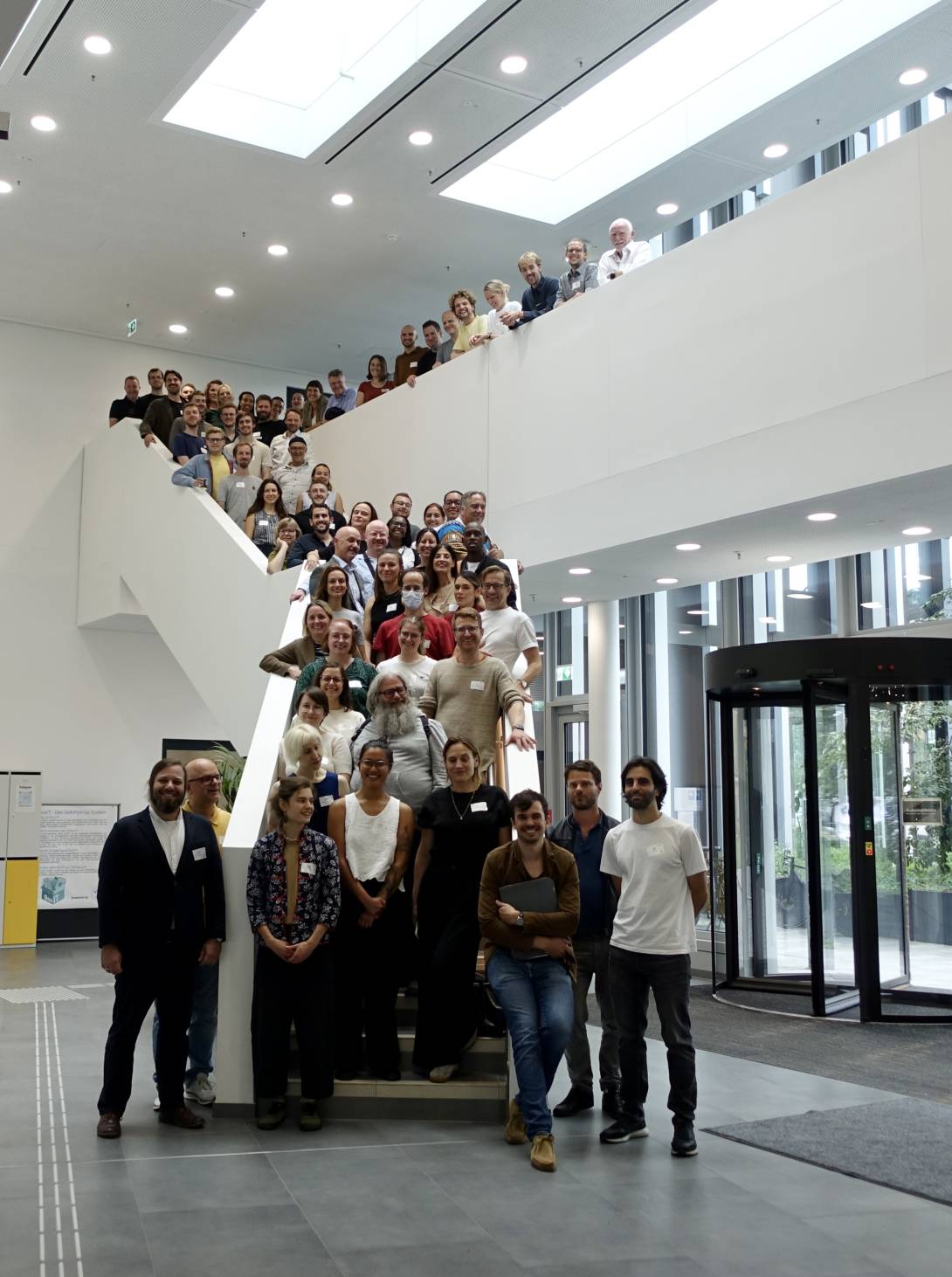
Participants at CONSULCon 2026 in Munich: Jena was represented at the international conference on digital citizen participation and the further development of the open-source platform CONSUL.